
Start with the dry product form
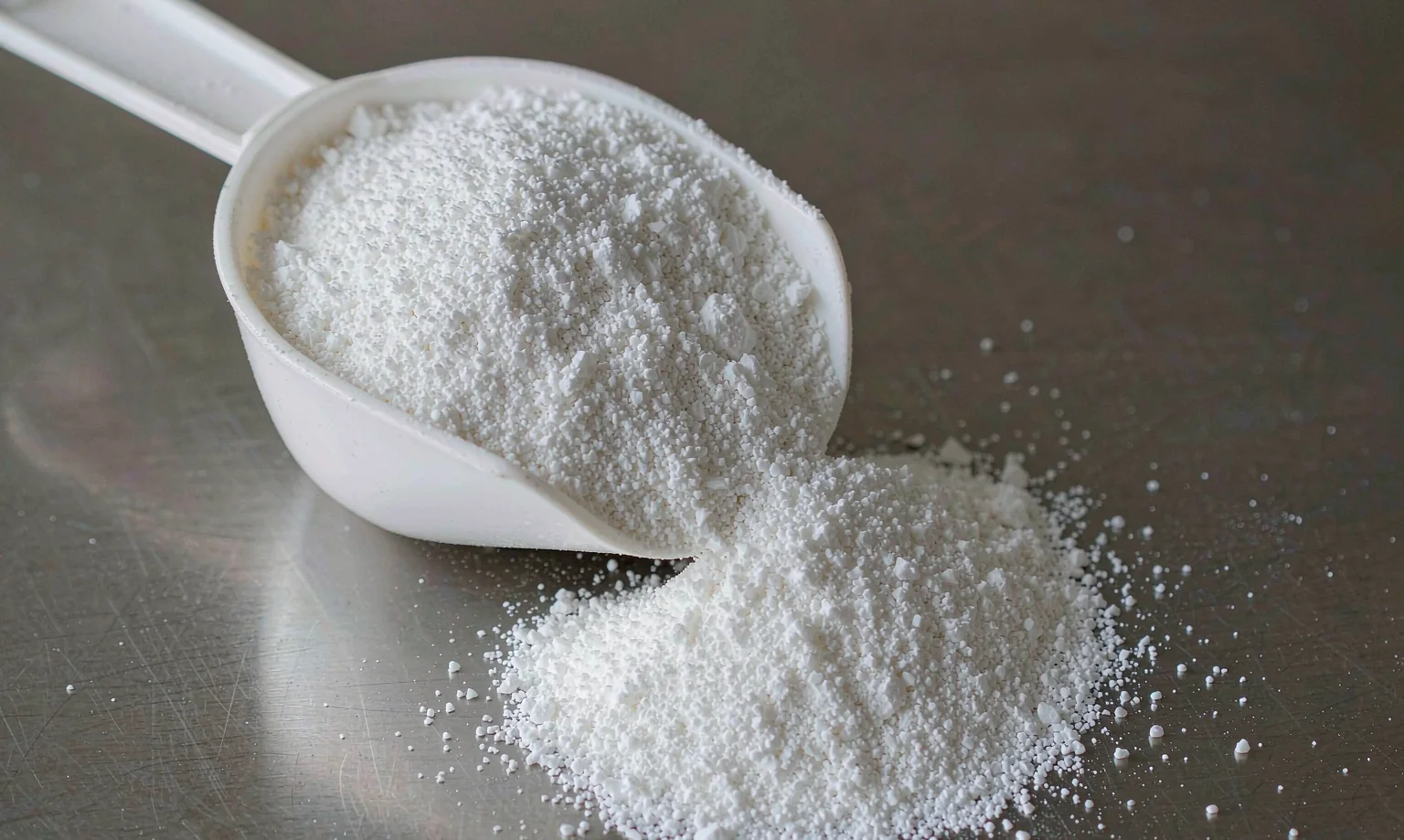
Powder polyacrylamide polymer is supplied as a free-flowing solid in cationic, anionic and nonionic families. Each family covers a range of molecular weight and charge level, so the product name alone does not identify a grade.
Record the ionic family, declared active content, molecular-weight class and lot before a trial. A code or specification sheet, not the word polymer, is what a supplier can reproduce.
Check dissolution, not only dry chemistry
Dry polymer must wet, disperse and hydrate without forming fish-eyes or lumps. Poor make-down reduces the active solution actually delivered even when the powder meets its laboratory specification.
Run a small dissolution check with the site water and the intended mixing energy. Confirm the time needed to reach a uniform, bubble-free solution before choosing a feeder.
Match the feeder to the powder
Powder feeders need a workable flow range, dust control and a reliable wetting path. Very fine or very cohesive powders can bridge, rat-hole or overdose at low settings.
Ask the supplier for bulk density and flow behavior, then verify the feeder at the intended low and high rates. Keep the product code tied to the tested feeder setting.
Control solution strength and aging
Prepare at the concentration the make-down system can hydrate fully, then dilute to the final feed strength. Aging time depends on molecular weight and water temperature.
Do not compensate for a weak dissolution system by raising dose. Correct preparation first, then confirm the active dose needed on the real feed.
Protect the powder in storage
Keep bags dry, sealed and off the floor, and rotate stock by lot. Moisture exposure causes caking and can change how the powder disperses.
Include package condition and lot identity in receiving checks. A damaged or wet bag should be quarantined before it enters the dosing system.
Define what the quotation must state
Request ionic family, active content, molecular-weight class, package size, current COA and SDS, and the lot-to-code relationship.
Compare delivered price on an active-polymer basis. A low price per bag is not comparable when active content or dissolution behavior differs.
Review the corresponding purchase duty
Match the supply brief to the product form and specification that were qualified. Relevant qualification decisions include Polyacrylamide Polymer Price: Compare on an Active-Polymer Basis; Polyacrylamide Polymer Active Content: Specification and Price Basis; Changing Polyacrylamide Polymer Supplier: Crossover Approval; Powder Polyacrylamide Feeder: Purchase and Capacity Checks; Polyacrylamide Polymer in 25 kg Bags: Purchase Checks; Bulk Polyacrylamide Polymer Packaging: Quotation Checks; Polyacrylamide Polymer Export Shipment: Document Checks.
Confirm the proposed sample identity, active-content basis and acceptance method before comparing delivered price. The approved commercial code should reproduce the product scope demonstrated during qualification.