
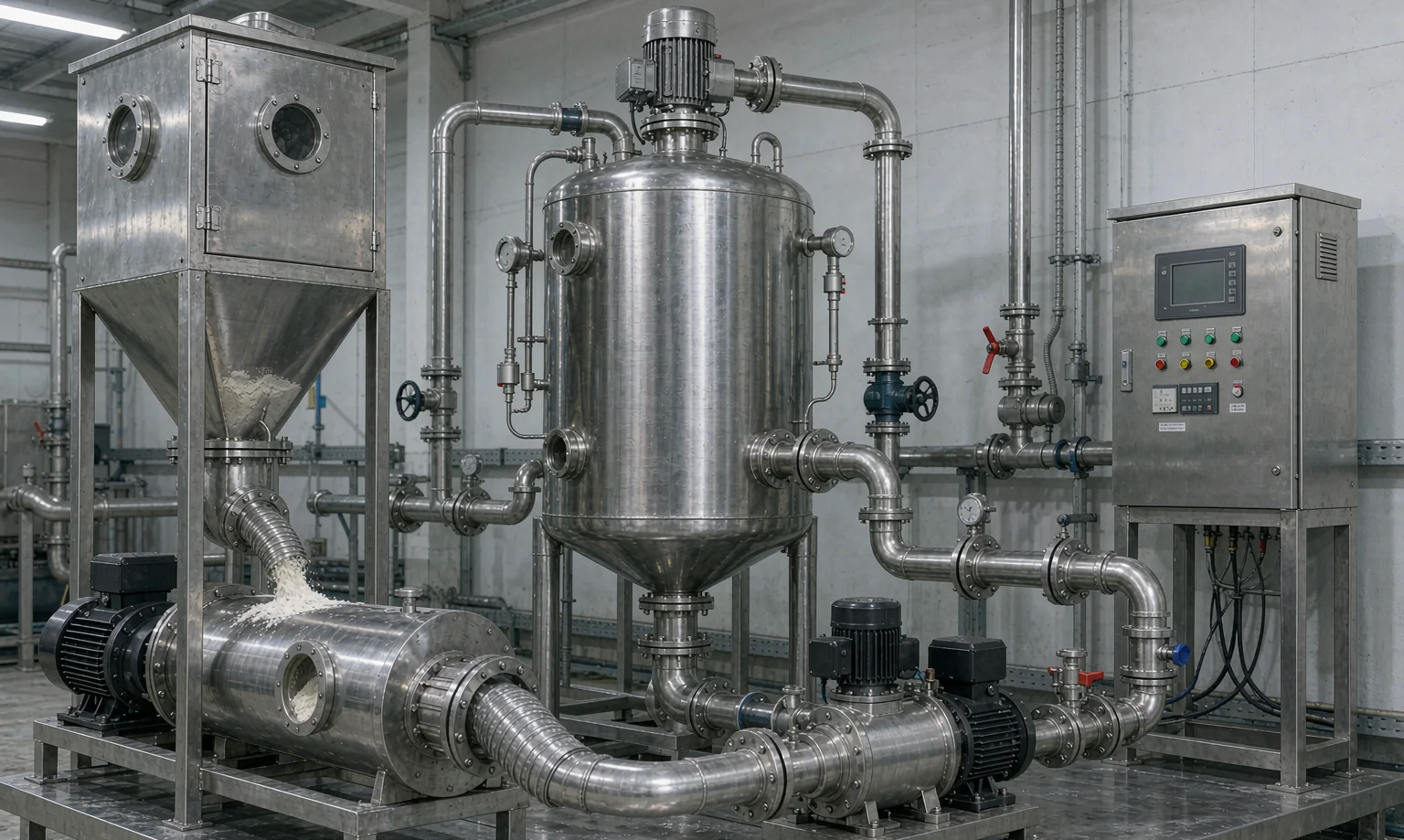
Size the purchase around the preparation bottleneck
The feeder must work across the required dose range and deliver into a wetting system that hydrates the powder fully.
State the low and high feed rates and the make-down capacity, then check the feeder against both ends of the range.
Test the supplied physical form
Bulk density and flow behavior differ between grades. Fine or cohesive powder can bridge or rat-hole.
Ask for flow data and run a feeding trial with the actual product. Keep the code tied to the tested setting.
Verify residence time during simultaneous production
Aging volume must match solution demand at peak feed. A feeder that outruns the tank delivers under-hydrated polymer.
Check that the make-down and aging system can hold the solution long enough at the highest expected dose.
Connect delivery quantity to protected storage
Powder needs dry, sealed storage and stock rotation. Order size should match protected capacity.
Confirm storage conditions and package integrity before scheduling a bulk delivery.
Prepare a focused sample and quotation request
Include feeder turndown, peak product rate, usable aging volume, water conditions and protected pallet capacity in the purchase request. Attach physical-handling observations to the proposed powder code; this makes it possible to reject an impractical bulk offer before committing storage space. Preserve the baseline from the corresponding product qualification.
Related purchase checks: Low-Molecular-Weight Polyacrylamide Polymer: Purchase Checks; Polyacrylamide Polymer in 25 kg Bags: Purchase Checks. Submit the defined requirement with the polyacrylamide polymer sample and quotation request.