
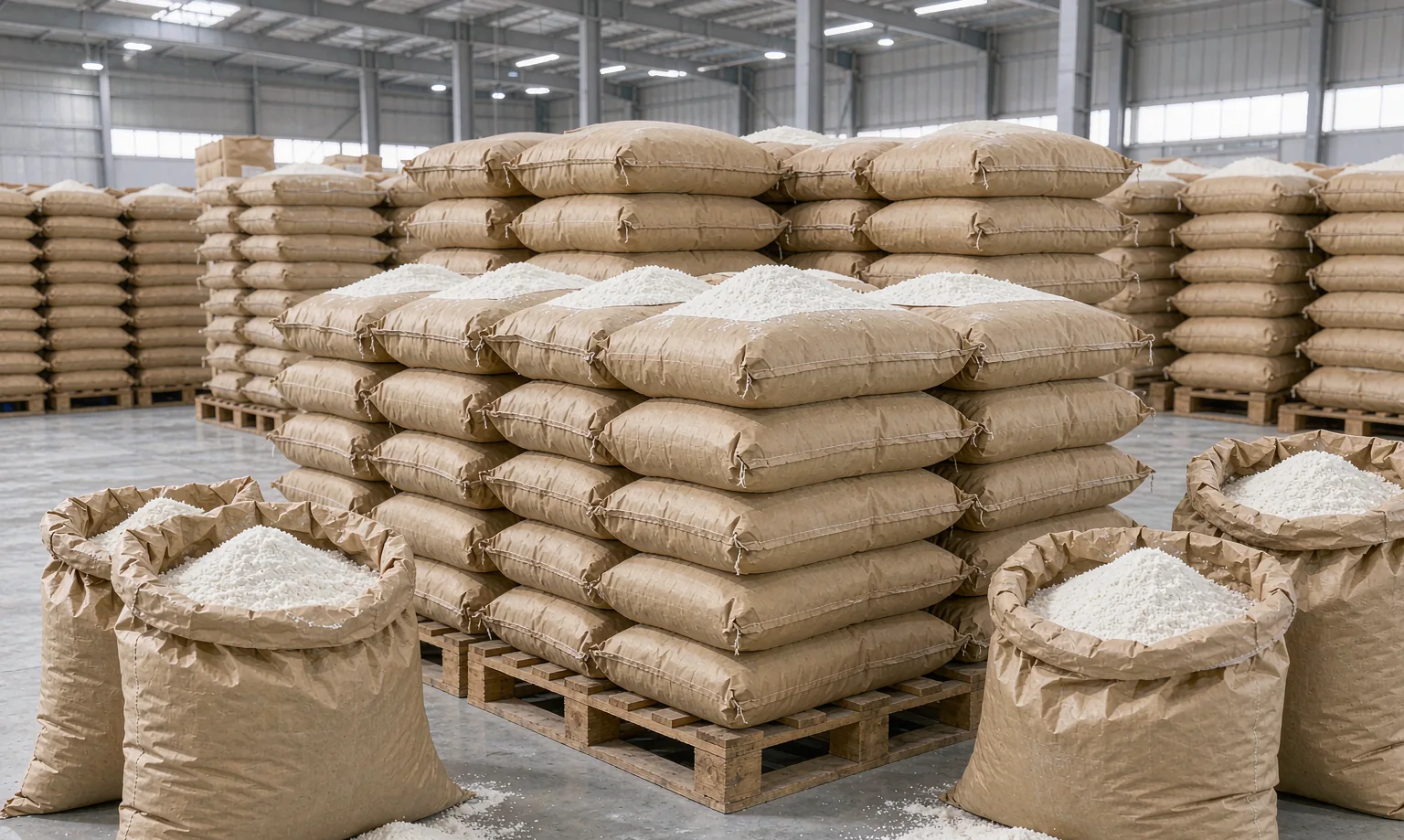
Powder is the standard dry form
Dry powder is supplied in bags and needs a wetting, dispersion and aging system before it is dosed.
Check bulk density, flow behavior and dissolution with site water. Verify feeder accuracy at the intended rates.
Emulsion needs inversion
Emulsion is a water-in-oil dispersion that must invert on dilution. Its active fraction is lower than a dry powder.
Test inversion with site water and list the dilution and metering equipment included in the offer.
Prepared solution is convenient but limited
Ready-made solution removes on-site make-down but carries water and transport cost and has a limited stable life.
Confirm concentration, shelf life and delivery logistics before treating it as the simplest option.
Normalize to active polymer
Compare every form on active polymer mass and on the equipment required to use it.
Show the active-content assumption beside each price and dose so another buyer can repeat the comparison.
Match form to the existing system
A form that the site cannot prepare or meter consistently will underperform regardless of its laboratory result.
Audit the make-down and dosing equipment before changing form and budget for any equipment changes.
Qualify a form change
Changing form changes preparation, storage and often the dose basis. Treat it as a new product.
Run a paired trial on the current feed and update the purchase specification before switching routine supply.
Compare forms on active delivered mass
Powder, emulsion and prepared solution contain very different fractions of active polymer. Price per kilogram of product is not comparable until it is converted to price per kilogram of active polymer.
Put delivered active mass, not drum or bag count, on the comparison sheet before rankings are made.
Emulsion inversion needs water and mixing
An emulsion must be inverted in water before the polymer is available. Water quality, mixing energy and inversion time decide whether the active polymer is released.
Confirm the site can provide the dilution water and mixing required by the chosen emulsion before approving that form.
Prepared solution trades convenience for shelf life
Ready-to-use solution removes on-site make-down but carries water freight and a limited storage window. It suits sites without preparation equipment more than high-volume continuous duty.
Balance freight of water and storage time against the saving in handling when choosing a prepared form.
Check the on-site water before choosing a form
Both powder make-down and emulsion inversion depend on water quality. Hard or salty water can slow hydration or reduce inversion efficiency, changing the effective dose.
Test preparation with the water the site will actually use before fixing the form and its preparation procedure.
Match metering accuracy to the dose
Powder solution and inverted emulsion are dosed as dilute liquids; prepared solution may be ready at feed strength. A form that needs a very small injection volume demands a more accurate pump.
Confirm the dosing pump can deliver the required rate reproducibly at the chosen form strength before approval.
Include the hidden handling costs
Powder needs dry storage and dust control, emulsion needs inversion equipment and residue handling, and prepared solution pays to transport water.
Put those requirements into the comparison so the cheapest form on paper is not chosen on an incomplete cost.
Check how concentration changes the logistics
A more concentrated product lowers freight per unit of active polymer but can be harder to handle and meter accurately at low rates.
Confirm the delivered active mass and the dosing accuracy before accepting a higher-concentration offer.
Record the form decision once
The choice of form should be tied to the preparation equipment, storage and acceptance method that were actually tested.
Keep that record under the product code so a later form change is treated as a revalidation.
Carry the product evidence into purchasing
Use the demonstrated feed, preparation and separation window to bound a commercial proposal. The appropriate next purchase checks are Powder to Emulsion Polyacrylamide: Conversion Quotation; Polyacrylamide Polymer in 25 kg Bags: Purchase Checks; Bulk Polyacrylamide Polymer Packaging: Quotation Checks.
Retain candidate and production codes with the trial record. Resolve untested feed conditions, preparation changes and documentary requirements before accepting a routine supply substitution.