
Treat emulsion as an active-content product
Emulsion polyacrylamide polymer is a water-in-oil dispersion. The delivered polymer fraction is only part of the product mass, so liter-for-liter or kilo-for-kilo comparisons with powder are misleading.
State the declared active fraction and calculate dose on active polymer mass. Keep the same basis when comparing an emulsion offer with a dry powder offer.
Verify inversion with site water
The emulsion must invert and release the polymer when diluted. Water quality, mixing energy and dilution ratio affect how completely and how quickly this happens.
Run a small inversion check with the actual dilution water. Incomplete inversion leaves oil-rich residues and weakens the solution before it reaches the feed point.
Plan the dilution and metering equipment
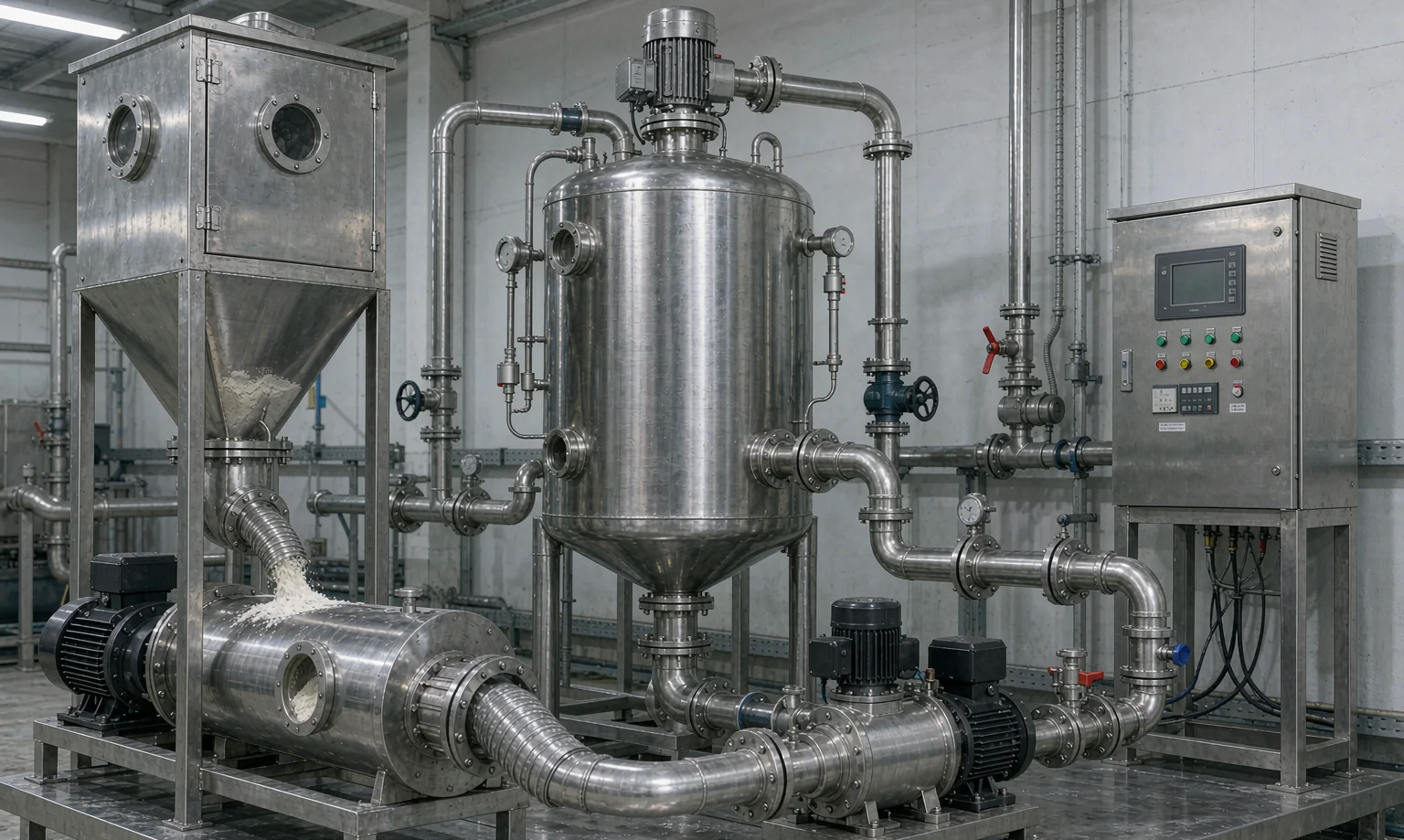
Emulsion systems need controlled dilution water, an inversion mixer or in-line device, aging volume and a metering pump sized for the active feed.
List which equipment is included in the offer and which is supplied separately. Confirm the pump can deliver the required active rate at operating backpressure.
Protect the product in cold and heat
Emulsion can separate or lose performance after freezing or prolonged high-temperature storage. Follow the supplier's storage range and shelf-life statement.
Rotate stock by lot and inspect for separation before use. Confirm storage conditions rather than assuming an emulsion tolerates the same handling as a dry powder.
Handle residues and housekeeping
Inversion oils and residues need a defined housekeeping route. Spills are slippery and can contaminate polymer solution or process streams.
Ask for the product's handling and SDS guidance, and include spill response in the site procedure before the first delivery.
Write a reproducible purchase identity
Specify active fraction, inversion requirements, package size, shelf life, COA and SDS, and the lot-to-code link.
Compare quotations on delivered active polymer and the equipment needed to use it, not on the price of the drum alone.
Review the corresponding purchase duty
Match the supply brief to the product form and specification that were qualified. Relevant qualification decisions include Polyacrylamide Polymer First Delivery: Lot Acceptance; Emulsion Polyacrylamide Inversion Unit: Purchase Checks; Polyacrylamide Polymer Storage and Shelf Life: Order Planning.
Confirm the proposed sample identity, active-content basis and acceptance method before comparing delivered price. The approved commercial code should reproduce the product scope demonstrated during qualification.